Services
UI / UX
Credits
Jerry Chen (Co-Designer)
Skills
UX Research
Swot Analysis
Product Thinking
Design System
Visual Design
Prototyping
Tools
Figma / FigJam
Overview
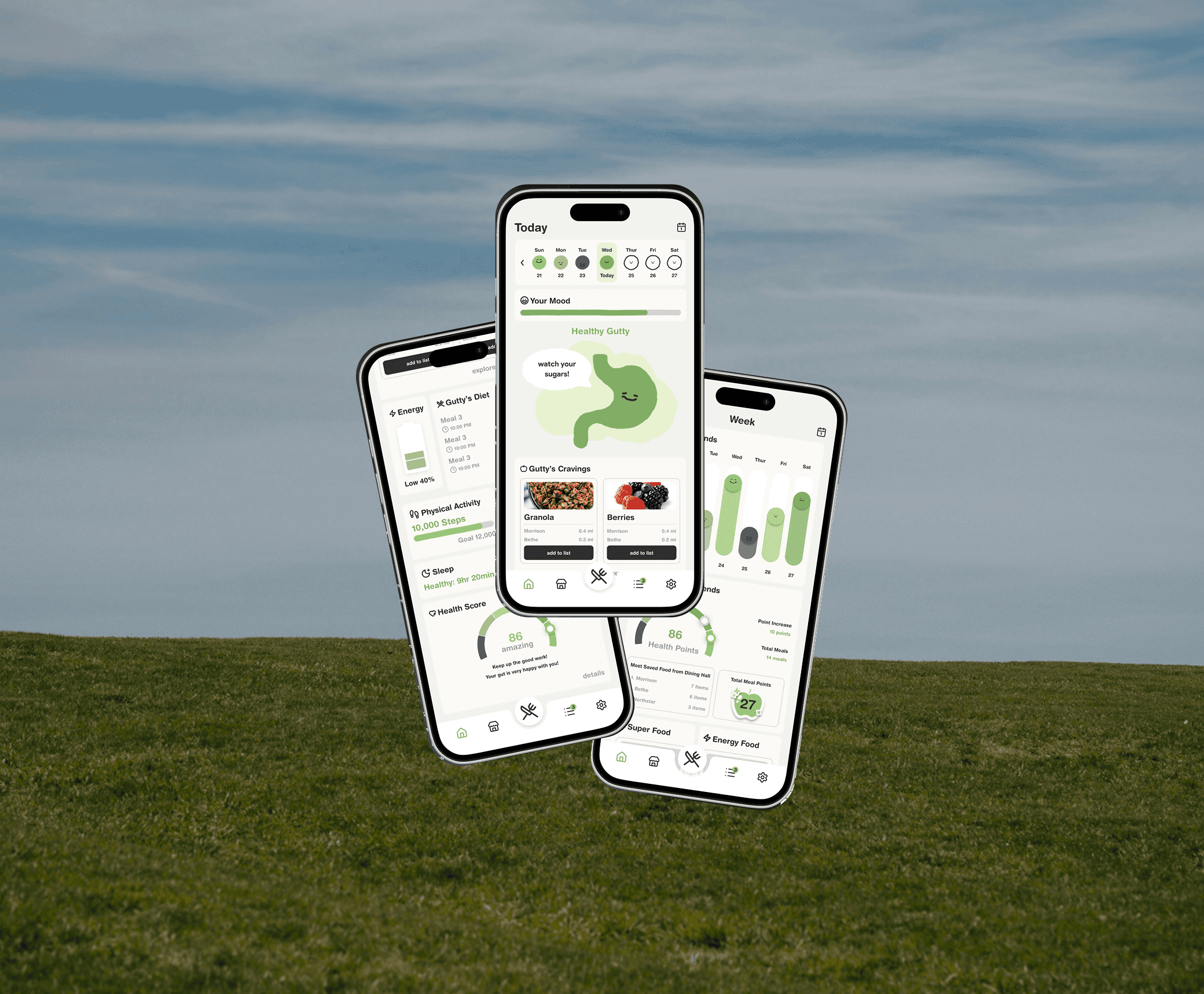
Students are oversaturated with calorie-tracking apps and mental health platforms like Headspace, as well as a new wave of AI-forward tools such as CalAI. Yet, there is a massive utility gap in connecting the two. We created Gutty to bridge this divide, helping students understand how their meals directly impact their mood, digestion, and long-term wellbeing.
User Research
To better understand our target user's behavior around the intersection of food and mental wellbeing, we conducted 4 in depth interviews across key demographics. Here's what we learned and the opportunity we found:
Insight | Opportunity |
|---|---|
Repetitive menus lead to low effort food choices. | Curate meals to eliminate choice paralysis. |
Students lack functional knowledge of nutritional data. | Translate metrics into one intuitive score. |
Academic stress triggers irrational, reactive eating habits. | Gamify health to provide healthy eating incentives. |
Biological symptoms are misidentified as academic burnout. | Connect food to mood and prove correlation. |
User Feedback
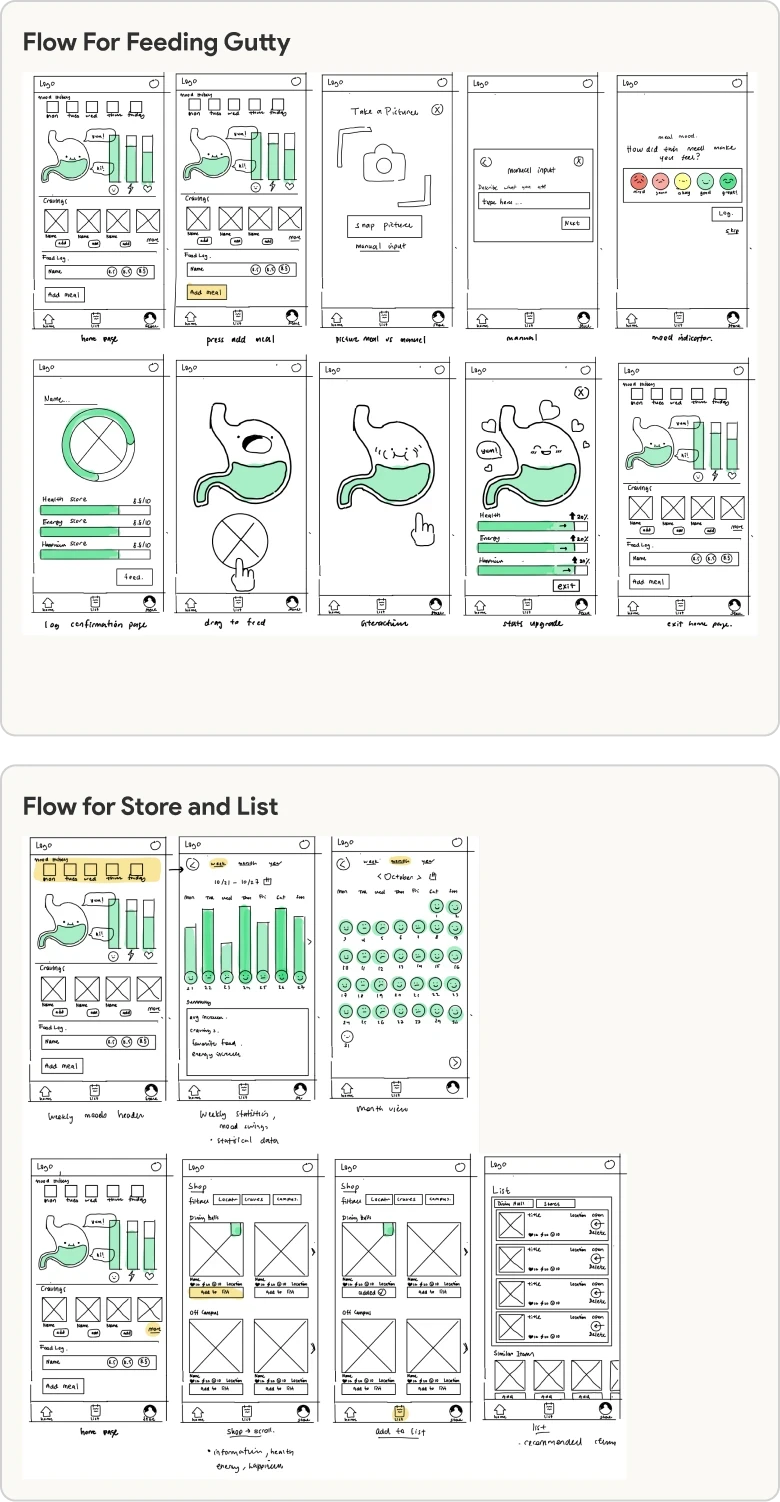
We iterated on feedback to make Gutty’s insights instantly scannable and motivating, specifically aiming to drive long term user retention.
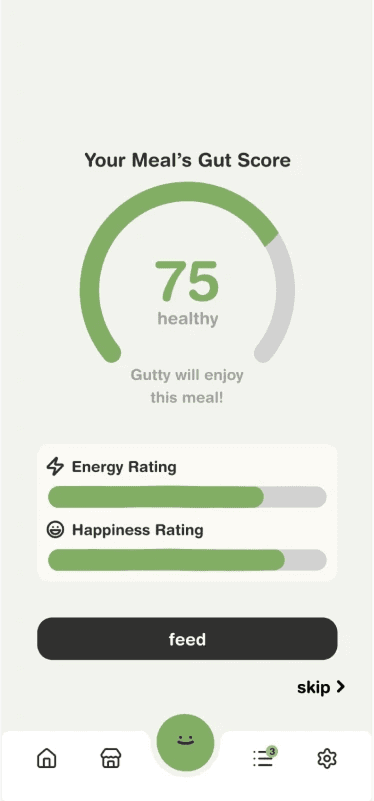 | 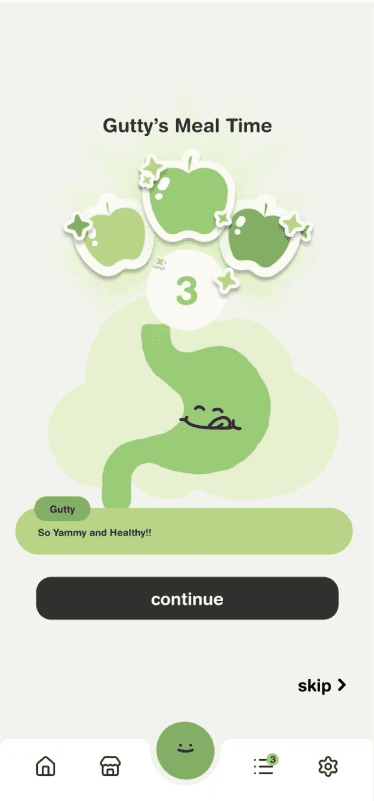 |
| Final Version |